
Behavioral Systems
Background Information
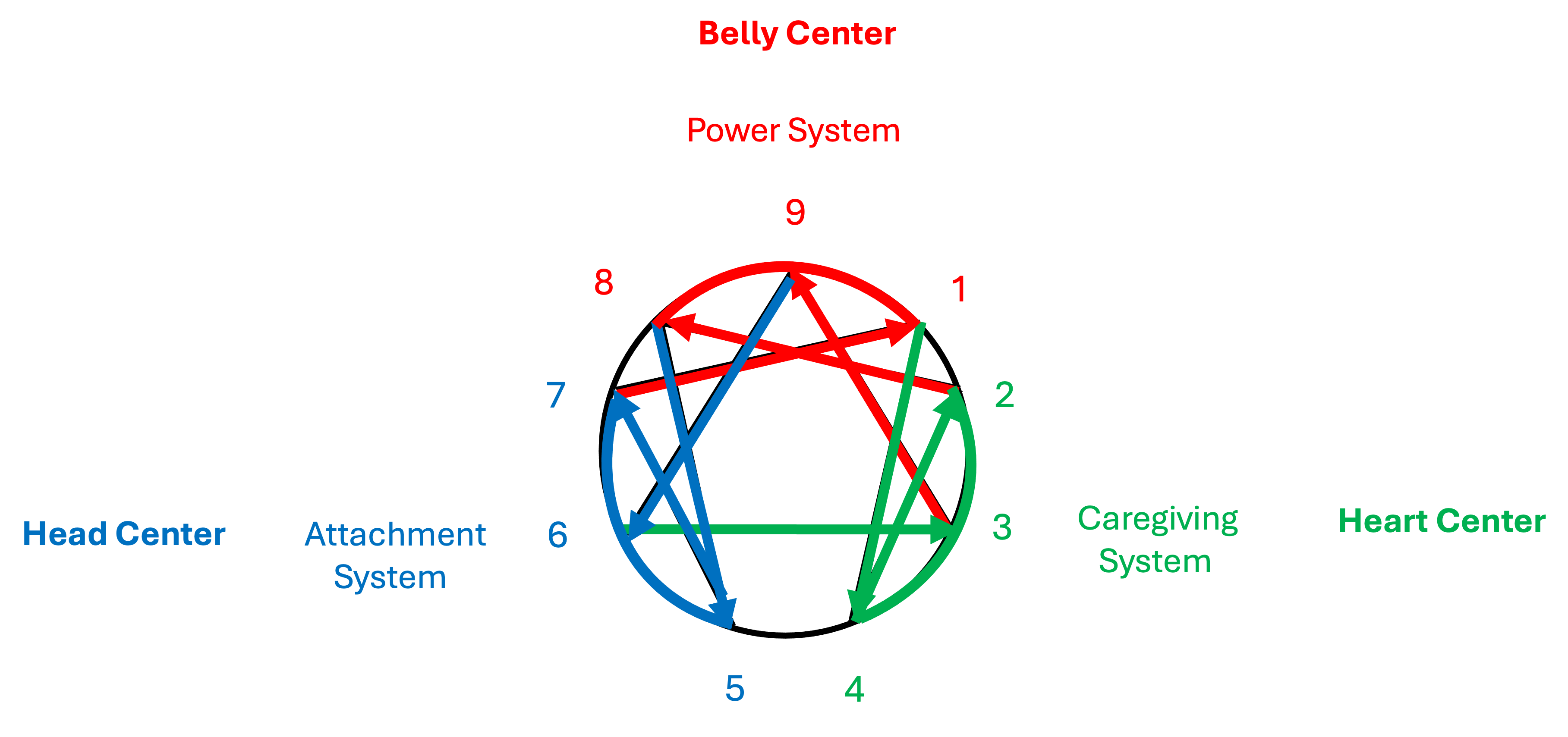
“… species-universal, dynamic information-processing neural programs that organize behavior in ways that increase the likelihood of survival and reproductive success.”
Hyper- and Hypo-Activation of Behavioral Systems
When behavioral systems are operating without distortion they become activated under certain conditions and remain activated until the goal of the system has been attained.
Attachment system is activated by experience of fear or threat and deactivated by perception that the attachment figure is close (can be psychological closeness) and willing and able to provide care.
Caregiving system is activated by perception that another is in need and deactivated by perception that the other is no longer in need (has been adequately helped).
Power system is activated by perception of threat to sense of power and deactivated by perception that the threat to power has been removed or overcome.
However, behavioral systems can become chronically hyper- or hypo-activated. When this happens, instead of attention moving freely as circumstances change, a person’s attention can become habitually fixed towards or away from the goal of the behavioral system.
Hyper-activated attachment system keeps attention continually oriented toward availability and attitude of attachment figure; hypo-activated attachment system keeps attention continually oriented away from attachment figure.
Hyper-activated caregiving system keeps attention continually oriented toward other’s needs; hypo-activated caregiving system keeps attention continually oriented away from other’s needs.
Hyper-activated power system keeps attention continually oriented toward threats to sense of power; hypo-activated power keeps attention continually oriented away from threats to sense of power.
Mapping patterns of hyper- and hypo-activation of attachment, caregiving, and power systems onto the Enneagram symbol
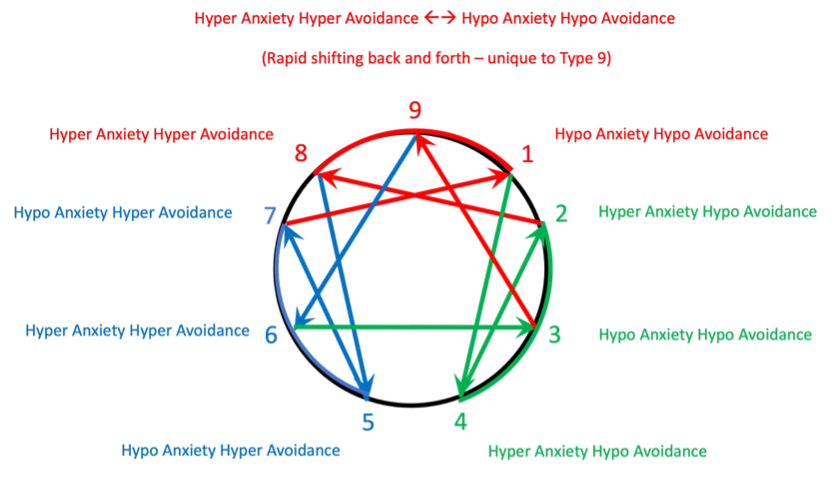
Shaver’s research demonstrates that there are individual differences in styles of attachment, caregiving, and power associated with chronic hyper- and hypo-activation of these systems. Shaver and colleagues also showed chronic hyper- or hypo-activation of these systems is associated with distinct kinds of thoughts. My doctoral research associated patterns of hyper- and hypo- activation of the attachment system with the nine Enneagram types.
The RF model, following Shaver and colleagues’ research on the interrelationship of hyper- and hypo-activated patterns among the three behavioral systems, proposes that the power system and the caregiving system will follow the same pattern as the attachment system for each type that I identified in my doctoral research:
Signature Emotions of Behavioral Systems
Mikulincer and Shaver2 reference Panksepp’s theory of primal emotions in describing the emotional tone of the the attachment, caregiving, and power systems:
attachment system is linked with SEEKING and PANIC systems
caregiving system is linked with CARE system
power system is linked with RAGE system
Mikulincer, M. & Shaver, P. R. (2021). Attachment theory: A behavioral systems approach of restudying species-universal and individual-differences aspects of the social mind. In T. K. Shackleford (Ed.), The SAGE handbook of evolutionary psychology: Foundations of evolutionary psychology (pp. 260 - 282).
Ibid